Juan Acosta  /  Acosta‑Li LLC  /  Austin, Texas

I make AI earn its keep.

Multi‑agent systems, production machine learning, and the data infrastructure underneath — taken past the pilot, into production, and out to a number you can point at. Healthcare, finance, education, and security.

Now

AI tools for education at the Bill & Melinda Gates Foundation, subcontracted through Alithi Management Consulting. My main engagement since December 2025.

Applied AI advisory at Sylvan Labs, expanded this year into hands‑on build work.

$81M
Returned to the Medicare Trust Fund
10M+
Medicare & Medicaid lives monitored
2M+
Predictions served per day, at peak
Best in KLAS, healthcare AI/ML, 2021–2023

Measured at ClosedLoop.ai, 2021–2024

What I do

Four things, done all the way to deployed.

I take on work that has to survive contact with the real world — a regulator, a clinician, a CFO, an on‑call rotation. That constraint shapes everything below. Engagements run from a two‑week scoping sprint to a multi‑quarter build.

01

Agentic systems & LLM workflows

Multi‑agent pipelines that produce evidence‑backed, auditable output rather than plausible prose. Custom agent development kits, MCP and agent‑to‑agent architectures, retrieval, fine‑tuning, evaluation harnesses, and the cost controls that keep it all viable at volume.

02

Machine learning in production

Prediction systems that run every day, not in a notebook. Distributed training and deployment, drift and bias monitoring, and the integration work that connects a model to the systems people actually use.

03

Data operations & infrastructure

The plumbing that decides whether any of it works: EHR and FHIR integration, lab instruments, LIS, CRM, warehouse. ETL and feature pipelines from prototype to production, with monitoring that holds up under an audit.

04

Risk, forecasting & analytics

Claims forecasting, financial risk modeling, cohort and outcomes analysis, supply chain vulnerability. Numbers a leadership team can act on and defend.

How an engagement runs

Three stages. You own it at the end.

Stage one

Scope

A working session to define the decision the system has to support, the data that actually exists, and what good has to look like. You leave with a written scope and a fixed price — whether or not you keep going.

Stage two

Build

Short cycles, each ending in something that runs. You see the real system on your real data instead of a deck describing one. Scope changes get priced before they get built.

Stage three

Hand off

Deployed into your stack with monitoring, documentation, and your team trained to run it. The goal is to make myself unnecessary, not retained.

Selected work

What I've built.

Bill & Melinda Gates Foundation, via Alithi  /  Higher education  /  2025–

Lucy, a strategy advisor for postsecondary transformation

College leaders mostly know what works. What they lack is a way to tell which of it applies to their institution, at their stage, with their data. Lucy matches an institution against 7,000+ NCES records, infers where it sits on a five‑stage transformation journey, and returns only the research that fits.

Multi‑agentGoogle ADKPublic good
Health Universe × i‑Cubed  /  Clinical trials  /  2024–2026

Project LOOM

A documentation system that drafts a trial's entire document set as one coherent body of work: protocol, manual of procedures, safety plan, patient recruitment materials. Nothing gets invented, and nothing drifts — edit one document and it surfaces every place that change contradicts the others.

An i‑Cubed Center initiative, validated and tested by Duke Clinical Research Institute.

AI architectAgenticCross‑document consistency
ClosedLoop.ai  /  Healthcare AI  /  2021–2024

$81M returned to the Medicare Trust Fund

Led the data science organization — 10+ data scientists, engineers, and project managers — reporting to the CEO as a non‑voting member of the executive team, and built the startup's professional services arm into a profitable line of business. The models: chronic disease progression and hospital admission risk across 10M+ Medicare and Medicaid lives, serving 2M+ predictions a day — presented at HFSA and the ADA and published in the Journal of Cardiac Failure. The preventative programs they powered were recognized by NAACOS and the Wall Street Journal.

Team of 10+P&L ownershipBest in KLAS ×3
Babson Diagnostics  /  Clinical diagnostics

Counting platelets that don't want to be counted

Prick a finger and platelets start clumping at the wound within seconds, and a clumped sample reads as a falsely low count. It's the reason small‑volume blood counts were long considered unreliable — published studies still find platelet bias beyond allowable limits in roughly a third of capillary samples.

Babson's answer was the inverse of Theranos's: stabilize a sample a tenth the size of a normal draw and run it on proven analyzers in a real lab. I developed the algorithmic assay that made the platelet count hold up, and operationalized it from research prototype through commercial launch.

Prototype → launchReal‑time MLInstrument integration
Health Universe  /  Oncology  /  2024–2026

The whole chart, read and sorted

A system that ingests a patient's complete medical record, determines which cancer it's looking at — patients often have more than one — and assembles a full clinical history for that specific disease. The summarizing isn't the hard part. Disambiguating which findings, treatments, and dates belong to which primary is.

Record ingestionMedical NERClinical histories
Health Universe  /  Revenue cycle  /  2024–2026

Getting pathology invoices paid

An agent‑to‑agent system that submits, resubmits, and appeals pathology invoices to payors. Before anything goes out it reviews each test against the justification on file and flags what's missing or too thin — the gaps that turn into denials. It pulls the patient's history to find the evidence that supports the test and surfaces it, so it can either be attached or sent back to the physician with a note naming exactly what's absent.

Agent‑to‑agentPayor workflowsDenial prevention

Also active

  • Sylvan Labs — applied AI advisory, now hands‑on build work
  • Atlas Mineral — B2B SaaS for precious metal order reporting and tracking, built for Alpax and running $1M+ monthly

Past engagements

  • SpyCloud — supply chain attack vulnerability
  • Capital Pulse — financial risk and forecasting
  • Beheld — analytics and workflow design

Who you'd be working with

Juan Acosta

Juan Acosta, holding a coffee

I'm a data scientist and engineer in Austin, Texas. I hold an M.S. in Computer Science from Boston University and a B.S. in Mathematics and B.A. in Economics from UT Austin. As of July 2026, Acosta‑Li is my only commitment.

I've spent most of my career consulting — embedded inside client teams rather than passing through them. Twice now a client has liked the work enough to bring me on full‑time, which is the part of the record I'd point at first. The work splits between the clinical side (trials, diagnostics, population health) and the operational side (claims forecasting, financial risk, supply chain security), which is usually where the interesting problems live.

Most engagements are me. When one needs more, I bring in a bench I've worked with for years — four data scientists and two project managers — so a project can scale without handing you a stranger. For work that needs a full delivery organization behind it, I partner with Alithi Management Consulting, where I run the Gates Foundation engagement today.

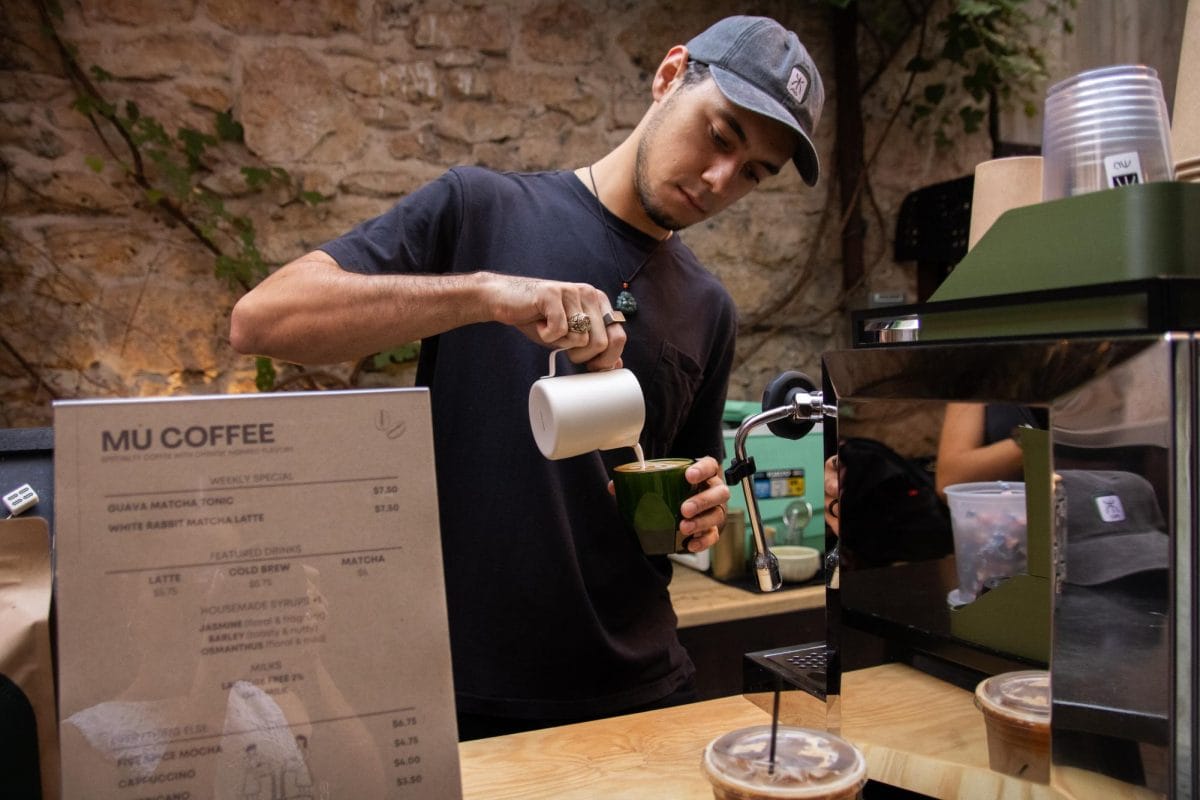
Outside the practice I co‑founded Mù Coffee ATX — not just a shop but an importer, bringing Chinese coffee into the US through a supply chain we run ourselves. Before any of this I played left wing for Baruta FC in Venezuela's FUTVE.

Juan pouring a matcha latte behind the bar at Mù Coffee ATX
Behind the bar at Mù Coffee ATX

Start here

Most AI stops at the demo.

Mine starts there. Getting a system into production — in front of real users, on real data, with someone accountable for the output — is the part that's hard, and it's the part that pays.

I take on a small number of engagements at a time, so I can be straight with you about whether yours is one I should take. Bring me the one that stalled: you'll get an honest read on what finishing it takes, and a written scope with a fixed price.